PRODUCTS
CUSTOM WALK-IN COOLERS
CUSTOM COOLERS BUILT TO SPEC
Your custom walk-in cooler is designed around three things: the space you have, the products you store and the temperature they need. We build every panel in the USA to your exact measurements, so the cooler fits your layout and keeps product properly refrigerated. From panel thickness and frame type to doors, displays and site requirements, each detail is planned around how you’ll use it every day.
Partner with our team to create a custom walk-in cooler for your food retail, c-store or foodservice operation.
WHAT IS A WALK-IN COOLER?
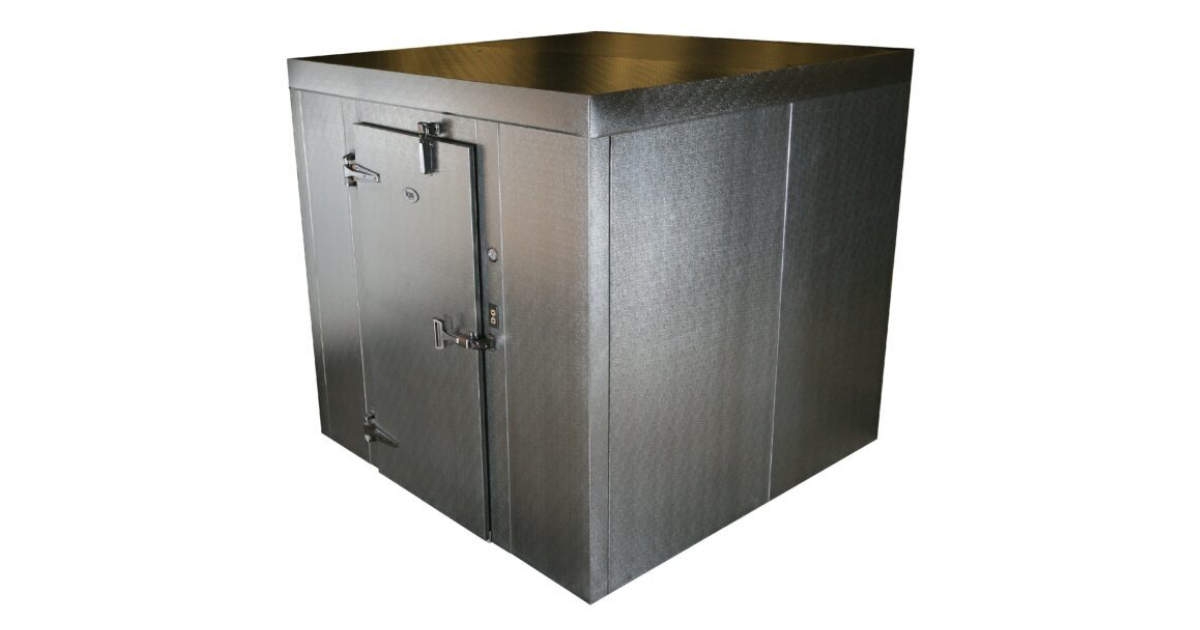
A walk-in cooler is a large, room-sized refrigerated space that keeps perishable products between 33°F and 38°F. Reach-in coolers are loaded through front-facing doors. A walk-in is different: staff step inside to stock, organize and retrieve products, and many walk-ins can also be fitted with glass display doors so shoppers can reach products from the store floor.
While some manufacturers focus on creating coolers at nominal sizing, meaning their cooler offerings come at standard sizes, Custom Cooler focuses on designing walk-ins specifically for your space and application. Building customs allows you to optimize space, minimize disruptions to business operations and maximize refrigeration capacity.
- Walk-in coolers store product between 33° F and 38° F
- Indoor and outdoor configurations
- Custom coolers available for grocery stores, convenience stores,
- Common applications include dairy, bakery, meat, produce, floral, beverage, deli and prepared food coolers
CONSIDERATIONS FOR COOLER DESIGN
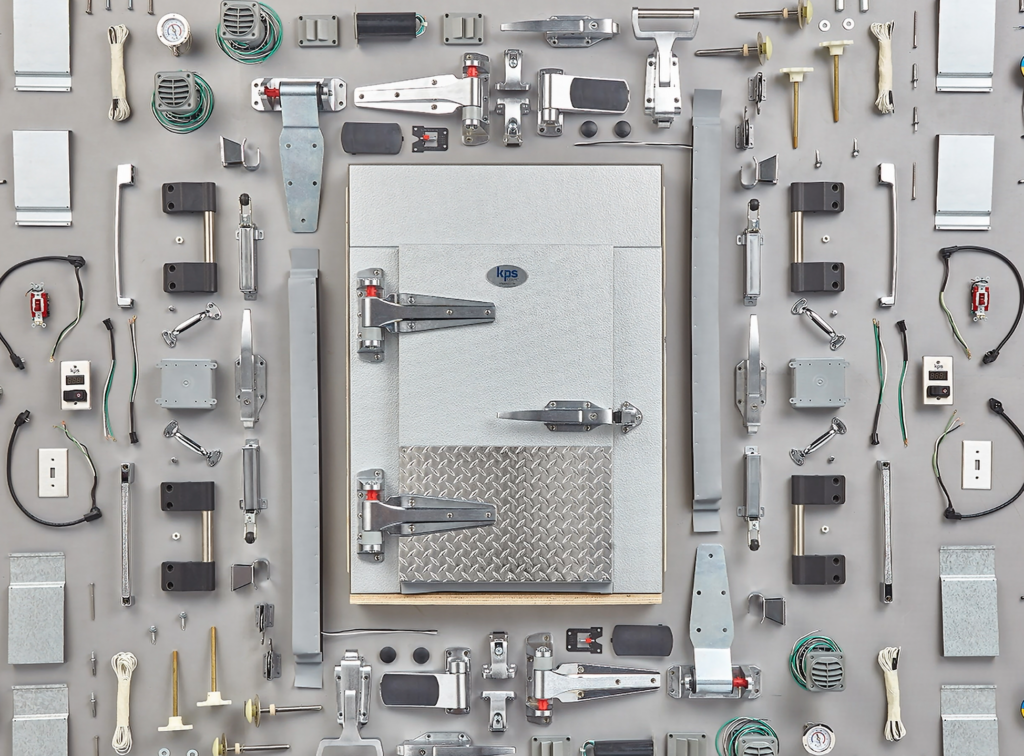
Every Custom Cooler walk-in cooler is built from 3½”, 4″ or 5″ panels filled with poured-in-place polyurethane foam. Each panel has a tongue-and-groove edge and a choice of three frames: wood, foam or FUSIONFRAME®. A cam-lock system with a gasket joins the panels, and together with butyl sealant it keeps water vapor from getting inside. That moisture barrier is what keeps a walk-in performing well year after year.
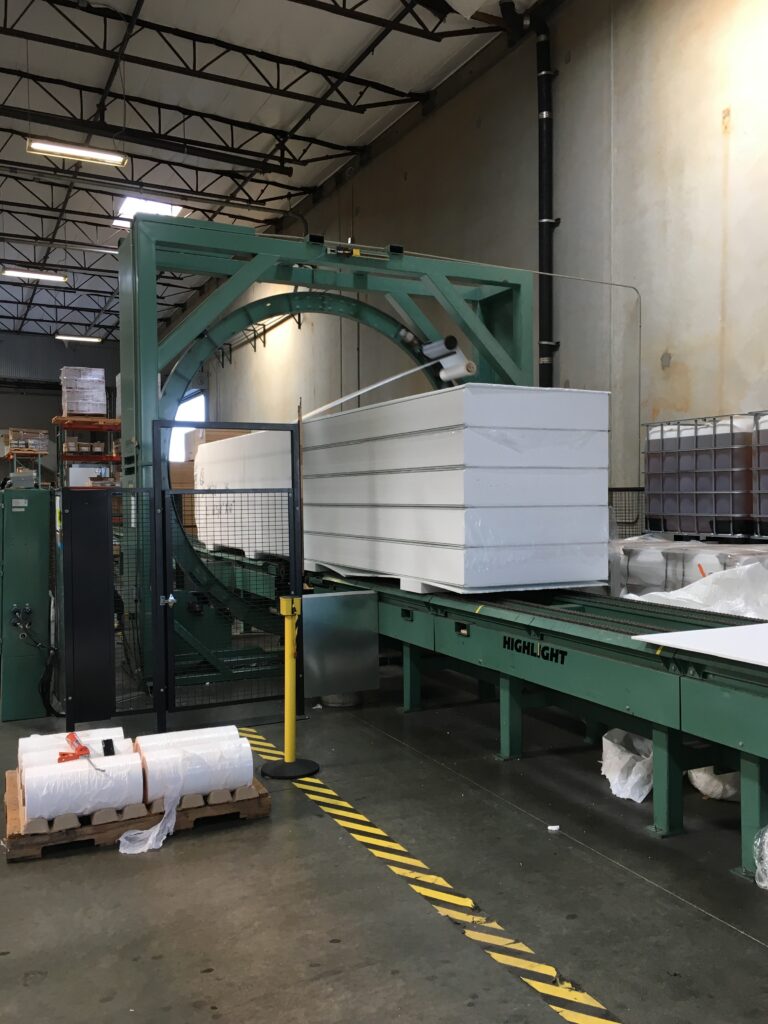
Our insulated panels use closed-cell polyurethane foam, which forms a lightweight, structural amalgamated panel. “Amalgamated” means separate parts joined into one solid unit. As the foam cures, its natural adhesive properties bond the metal skins and the frame together, which makes it well suited for building structures.
- Choose between 3 panel types: Wood, FUSIONFRAME and INSULFRAME (HDR)
- Pick your panel thickness: 3 1/2", 4" and 5"
- Cam-lock technology creates airtight seal between seams
- Made with closed-cell polyurethane foam, offering the highest R-Value per inch
OUR PANEL TYPES
We recommend 5-inch or thicker HDR or FUSIONFRAME® panels for walk-in freezers. Wood frames and 4-inch panels meet minimum requirements but carry a greater risk of condensation.
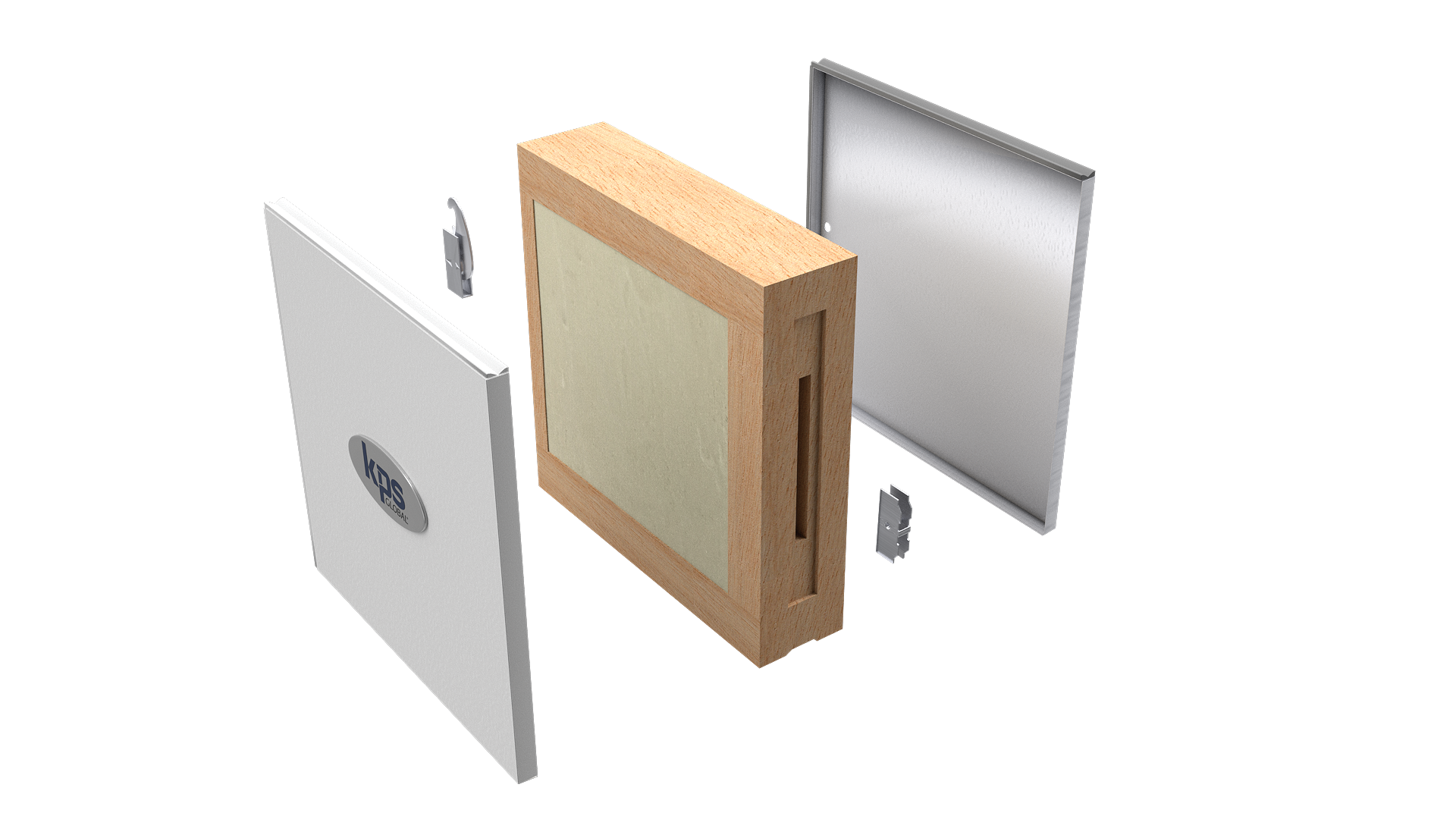
Wood Frame
The Traditional Choice
Wood-framed panels are a proven, cost-effective option for many cooler and freezer applications. They’re a familiar standard across the industry and work well where moisture exposure is limited.
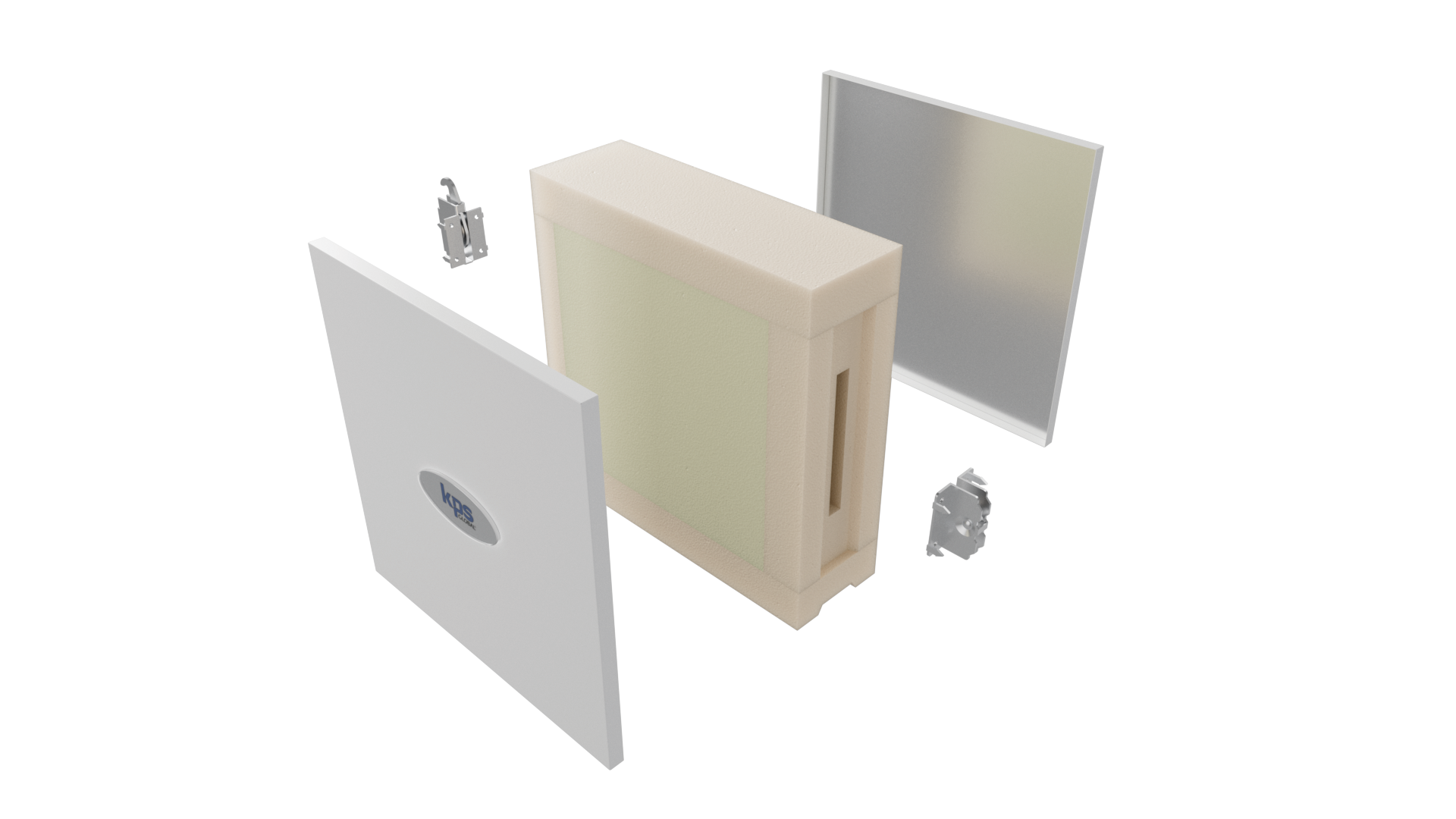
INSULFRAME®
No Wood Frame
High-Density Rail panels replace the wood perimeter with a high-density polyurethane rail, carrying insulating value all the way to the panel edge. For freezers, we recommend HDR panels 5 inches or thicker to reduce the risk of condensation.
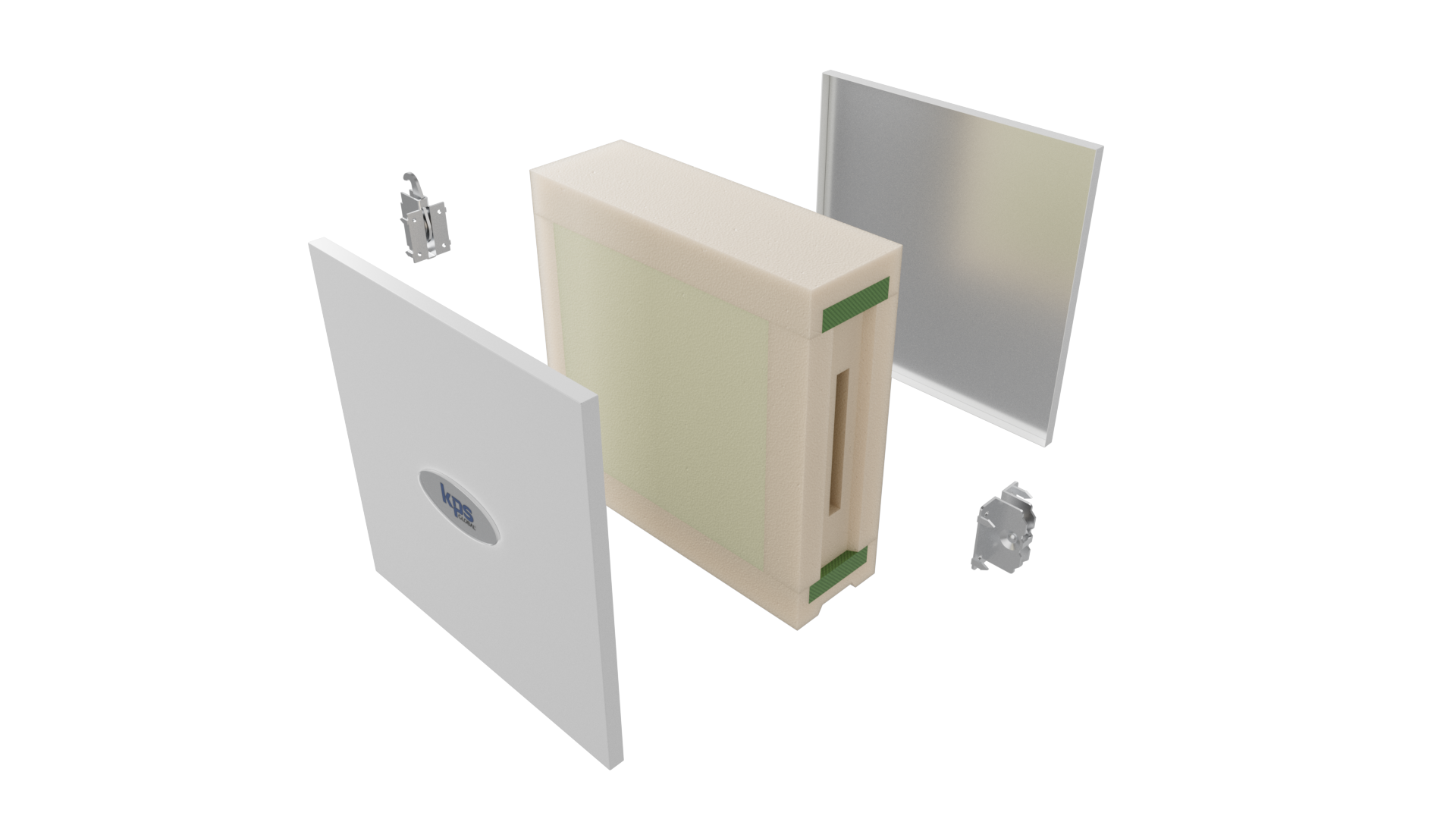
FUSIONFRAME®
Proprietary Solution
FUSIONFRAME embeds a structural wood core in polyurethane foam, combining the strength of wood with the R-Value of foam. It limits vapor infiltration, moisture absorption and icing in the joint space, and its R-Value doesn’t degrade over time the way wood does.
WANT TO LEARN MORE?
Custom Cooler is a KPS Global company. For more information on combined services and offerings, contact us or visit the KPS Global website.
COMPLETE YOUR WALK-IN COOLER
No cooler would be complete without neccesary components. Whether it’s strip curtains for a shoppable cooler, display doors for convenience stores, or cooler doors to seal the cold inside.
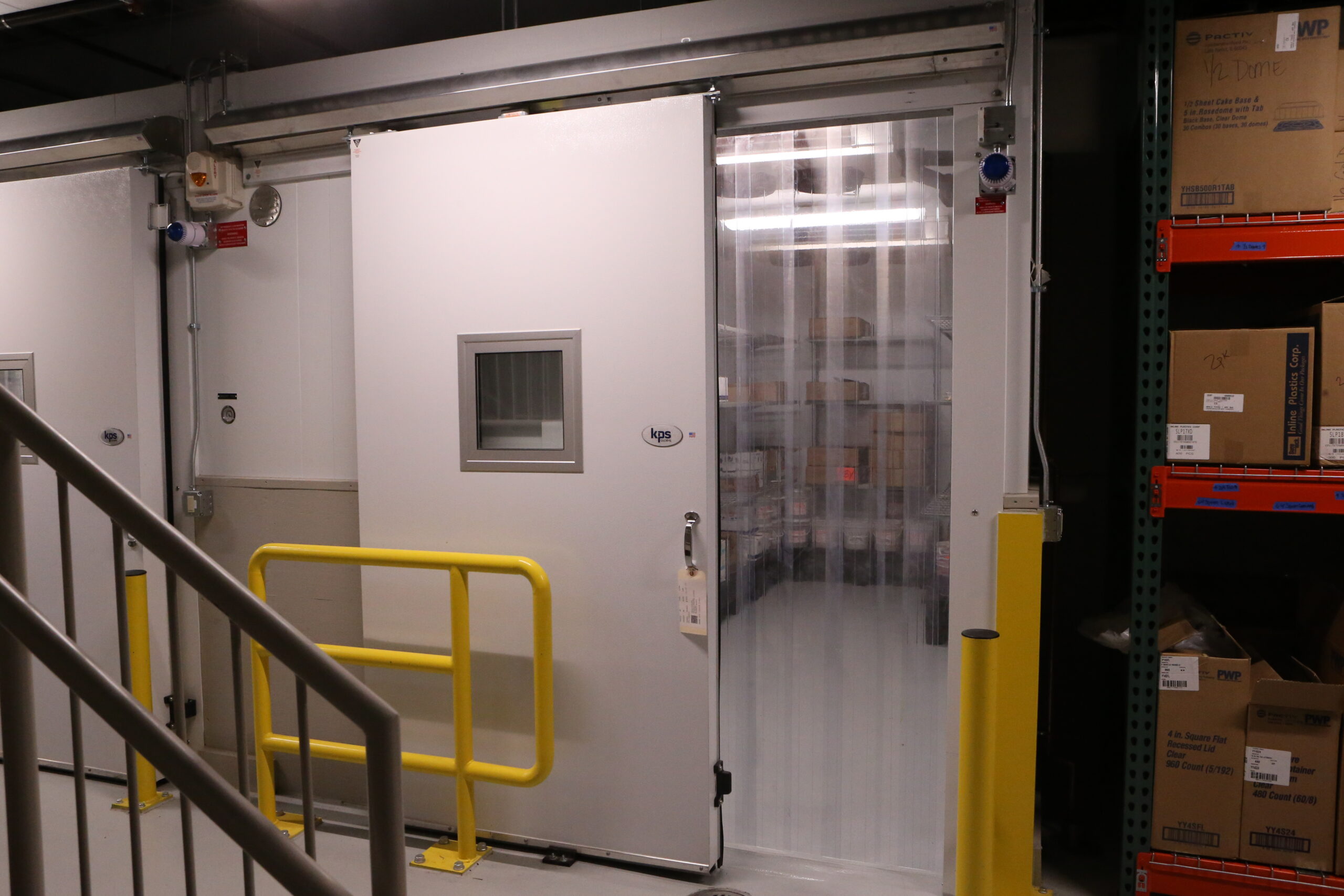
STRIP CURTAINS
Reduce Thermal Transfer
Strip curtains act as a barrier that keeps cold air in and warm air out whenever the walk-in door is open. In busy coolers where doors open often or stay open during deliveries and restocking, they help the unit hold its temperature and keep the refrigeration system from working harder than it has to.
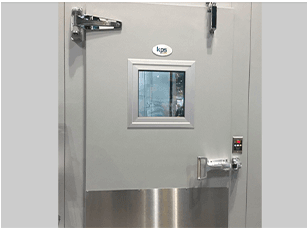
COOLER DOORS
Heated for a Tight Seal
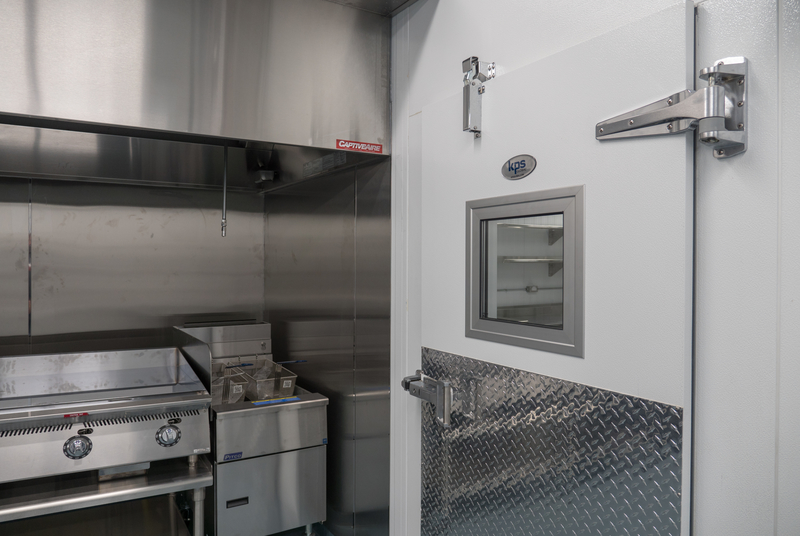
Heated doors, sweeps and thresholds prevent frost and ice buildup so your door seals tight at every opening.

DISPLAY DOORS
Merchandise Product Easily
Display doors put products in front of shoppers and let them grab what they need right from the store floor. Staff can restock from behind the display, inside the walk-in, so the cold stays in and the aisles stay clear.
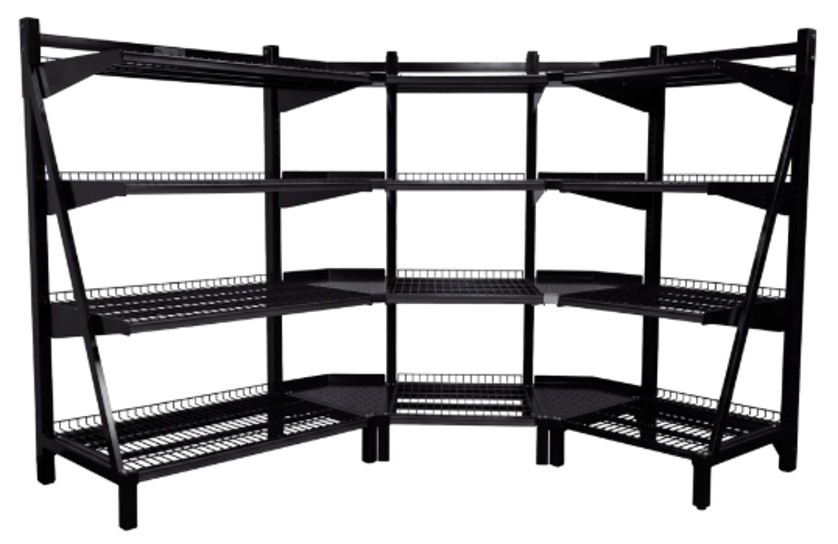
BEER CAVE SHELVING
Merchandise More, Restock Faster
Shelving built for the cold, wet conditions inside a beer cave. Heavy-duty shelves hold full cases without sagging and adjust as your product mix changes. Angled shelves keep cans and bottles faced forward, so the cooler always looks full, restocking goes faster and customers can grab what they came for.
Should I order a standard size walk-in cooler or a custom?
A standard size walk-in cooler rarely fits your space, product mix or workflow exactly, though, so most customers get more from a custom walk-in built to their exact dimensions. It uses every inch of space, holds the right conditions and includes the doors, shelving and features your operation needs.
Which panel type is best for a walk-in cooler?
We recommend HDR or FUSIONFRAME panels for walk-in freezers. FUSIONFRAME combines the strength of wood with the R-Value of polyurethane, and HDR uses an all-polyurethane rail. We don’t recommend wood-framed panels for freezer applications.
Which panel thickness is best for a walk-in cooler?
We recommend panels 5 inches or thicker. While 4-inch HDR panels meet the DOE minimum R-Value, they carry a greater risk of condensation depending on temperature difference and humidity.
Do I need a floor for my walk-in cooler?
Yes. Every walk-in freezer requires floor panels or an insulated floor. The floor type depends on how you use it, from foot traffic to pallet jacks, and larger freezers may need underfloor venting or heating to prevent frost heaving.
What kind of door is best for my cooler?
Some coolers, like meat or beer coolers, hold temperatures below 32°F and should be built to freezer specifications. Our team will help you determine what your application needs.